


What are the main types of mechanical seals and how do they work?
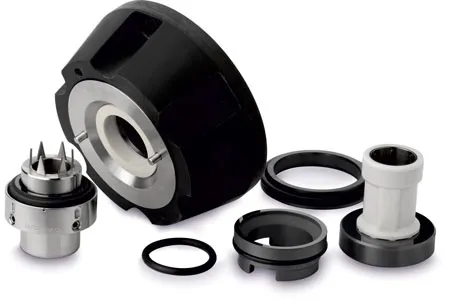
Mechanical seals are critical components used in pumps, compressors, mixers, and rotating equipment to prevent fluid leakage. They ensure smooth operation, reduce maintenance, and enhance the lifespan of equipment. Understanding the various types of mechanical seals and knowing how they work helps industries choose the right sealing solution for their applications.
What Is a Mechanical Seal?
A mechanical seal is a device that forms a seal between a rotating shaft and the stationary pump housing, preventing leakage of liquid or gas. It replaces traditional packing glands, offering far superior performance, reliability, and efficiency.
Mechanical seals work on the principle of maintaining a tight interface between two very flat surfaces:
- Rotary Face (Mounted on Shaft)
- Stationary Face (Mounted in Housing)
A micro-thin film of fluid lubricates these faces, reducing friction and preventing heat generation. This lubrication film is essential for long seal life.
Types of Mechanical Seals
Mechanical seals come in various designs, each suited for specific operating conditions, temperatures, pressures, and fluid types. Below are the most commonly used types.
- Pusher Seals
Pusher seals use a spring and dynamic secondary seal (usually an O-ring) that moves axially to maintain contact between the rotating and stationary faces.
How They Work:
• Springs push the rotary face towards the stationary face.
• The secondary seal (O-ring) moves back and forth as the shaft shifts.
Best For:
• Moderate pressure applications
• Clean fluids
Advantages:
• Cost-effective
• Easy to install
• Suitable for a wide variety of pumps - Non-Pusher Seals (Bellows Seals)
Bellows seals use a metal or elastomer bellows instead of dynamic O-rings. The bellows provide both the spring force and flexibility.
How They Work:
• Bellows expand/contract to maintain sealing pressure.
• No sliding O-rings, so friction is reduced.
Best For:
• High temperature applications
• Sticky or crystallizing fluids
• Corrosive chemicals
Advantages:
• No O-ring hang-up
• Excellent for thermal cycling
• Highly reliable in harsh environments - Single Mechanical Seals
A single seal has one pair of sliding faces and is the simplest sealing arrangement.
How They Work:
• One primary seal interface handles all sealing duties.
• Lubrication from process fluid or an external flush keeps faces cool.
Best For:
• General industrial pumps
• Water, oils, coolants
Advantages:
• Economical
• Lower maintenance
• Simple installation - Double Mechanical Seals
Double seals include two sets of faces arranged either back-to-back, face-to-face, or tandem. They require an external barrier/buffer fluid.
How They Work:
• A pressurized or unpressurized fluid runs between the two seals.
• The barrier fluid prevents process fluid leakage and lubricates seal faces.
Best For:
• Hazardous, toxic, or abrasive fluids
• High pressure and high temperature systems
Advantages:
• Maximum leakage protection
• Required in industries following API 682 standards
• Ideal for chemical and petrochemical applications - Cartridge Mechanical Seals
Cartridge seals come pre-assembled with gland, sleeve, and faces in a single unit.
How They Work:
• Pre-set spring compression ensures perfect face alignment.
• Plug-and-play installation reduces human error.
Best For:
• Industries with frequent maintenance
• Pumps requiring quick replacement
Advantages:
• Eliminates installation errors
• Reduces downtime
• Best reliability with zero alignment issues - Balanced and Unbalanced Seals
Balanced Mechanical Seals
Balanced seals are designed to handle higher pressures with reduced face load.
How They Work:
• Pressure distribution is optimized by modifying the seal geometry.
• Less heat generation, resulting in longer seal service.
Best For:
• High pressure pumping systems
• Hydrocarbon services
Unbalanced Mechanical Seals
Unbalanced seals are simpler and used for lower pressure applications.
How They Work:
• More load is applied on the seal faces, increasing friction.
Best For:
• Low pressure and clean fluids
• Economical installationsHow Mechanical Seals Work – Step-by-Step
1. Two Flat Faces Come in Contact
A rotary face spins with the shaft, while a stationary face remains fixed.
2. Springs Apply Axial Force
Springs, bellows, or hydraulic pressure push the faces together.
3. A Micro-Thin Lubricating Film Forms
This film reduces friction and prevents overheating.
4. Leakage is Minimized
The seal allows only vapor-level leakage, keeping the system safe.
5. Secondary Seals Support the System
O-rings, bellows, and elastomers prevent fluid bypass.
Conclusion
Mechanical seals play a vital role in maintaining pump reliability and preventing leakage. Selecting the right type depends on factors like pressure, temperature, fluid properties, and environmental safety standards.